Energy CPI (All Items)
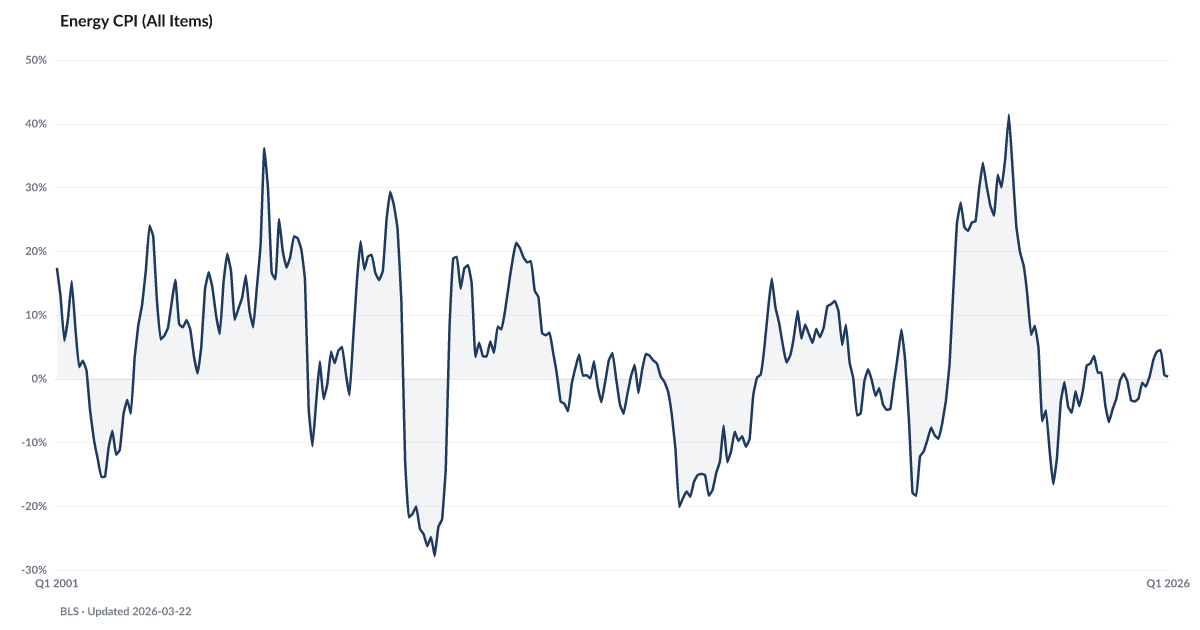
Year-over-year change in the energy component of the CPI
Validated leading indicator for Lower-Income Wage Growth vs. Inflation Gap (1q lag) — currently dormant. Lower-Income Wage Growth vs. Inflation Gap · View projections
What is the current Energy CPI (All Items) reading?
Energy CPI (All Items): 14.45% as of 2026-07. Source: U.S. Bureau of Labor Statistics (CUSR0000SA0E).
Measurement basis: Year-over-year percent change computed from the seasonally adjusted BLS Energy CPI (CUSR0000SA0E); seasonally adjusted values may be revised
Energy prices ran 14.45% above a year earlier in July 2026
Energy CPI moved from 15.45% in June 2026 to 14.45% in July 2026. The U.S. Bureau of Labor Statistics publishes the category detail with each monthly release.
The energy index combines fuel and utility categories. Gasoline, electricity, and natural gas can move in opposite directions in the same month, so the combined figure hides as much as it shows.
The annual and monthly readings answer different questions. A lower annual rate does not mean the energy price level is below where it was a year earlier. It means the gap has narrowed.
The national energy basket cannot identify one household's bill. A household's mix of gasoline, electricity, and natural gas determines which part of the move it encountered.
Use the annual rate to track the pace of change from a year earlier. Then use the category detail in the latest release to see what changed inside it. The chart retains the annual history as later releases arrive.
Explore Further
How has Energy CPI (All Items) changed over time?

Most affected counties
Counties with the highest debt burden scores in the County Distress Index.
Explore all 3,144 counties →| Period | Value | YoY Change |
|---|---|---|
| Jul 2026 | 14.45% | +15.68 pp |
| Jun 2026 | 15.45% | +16.07 pp |
| May 2026 | 22.97% | +26.07 pp |
| Apr 2026 | 17.54% | +21.11 pp |
| Mar 2026 | 12.59% | +15.98 pp |
| Feb 2026 | 0.4% | +0.84 pp |
| Jan 2026 | -0.3% | -1.12 pp |
| Dec 2025 | 2.07% | +2.4 pp |
| Nov 2025 | 4.16% | +7.3 pp |
| Sep 2025 | 2.94% | +9.76 pp |
| Aug 2025 | 0.37% | +4.41 pp |
| Jul 2025 | -1.24% | -2.23 pp |
Frequently Asked Questions
What is Energy CPI (All Items)?
Year-over-year change in the energy component of the CPI
Why does Energy CPI (All Items) matter for financial distress?
Energy CPI (All Items) is one of the indicators tracked by the American Distress Index (ADI), which measures five dimensions of U.S. household financial distress: Delinquency, Default & Legal, Debt Burden, Labor, and Safety Net & Buffer. Changes in this indicator contribute to the overall distress picture.
Where does the Energy CPI (All Items) data come from?
This data comes from U.S. Bureau of Labor Statistics (CUSR0000SA0E). More information: https://data.bls.gov/timeseries/CUSR0000SA0E. The American Distress Index updates this indicator monthly.


Quick poll
Is this affecting you or your household?
Discussion
Get the numbers when they move.
New data drops, indicator updates, and ADI score changes — delivered when it matters. No spam.
or Create an Account for full access
Loading comments…