The Wipeout Ratio
Ratio of Chapter 7 liquidation to Chapter 13 reorganization filings
What is the current The Wipeout Ratio?
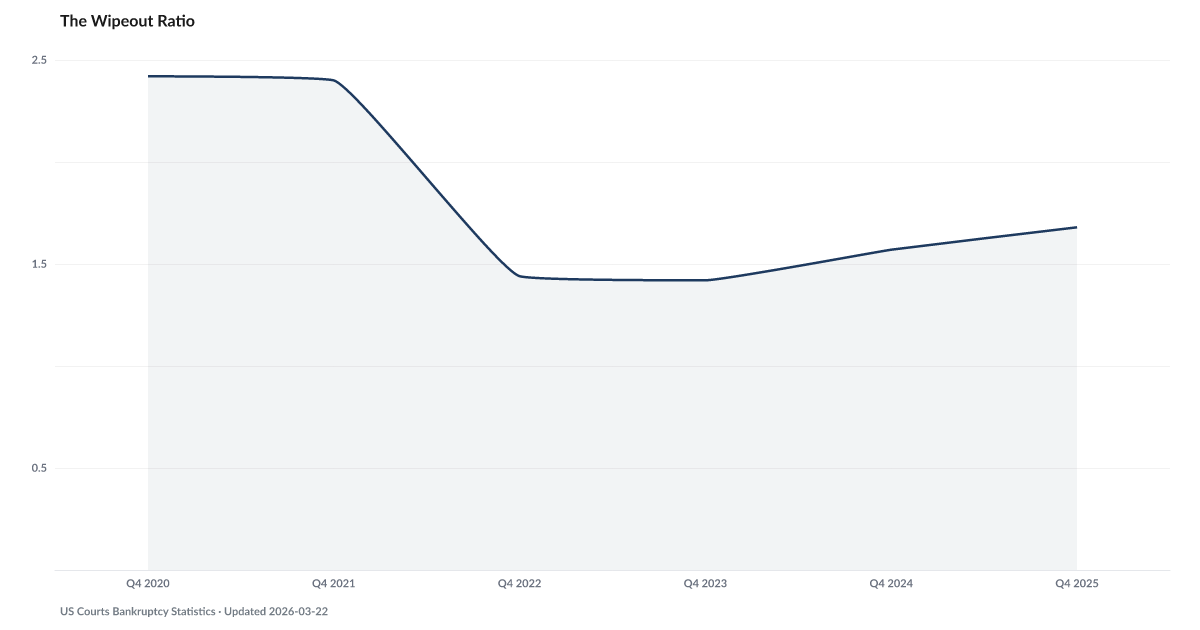
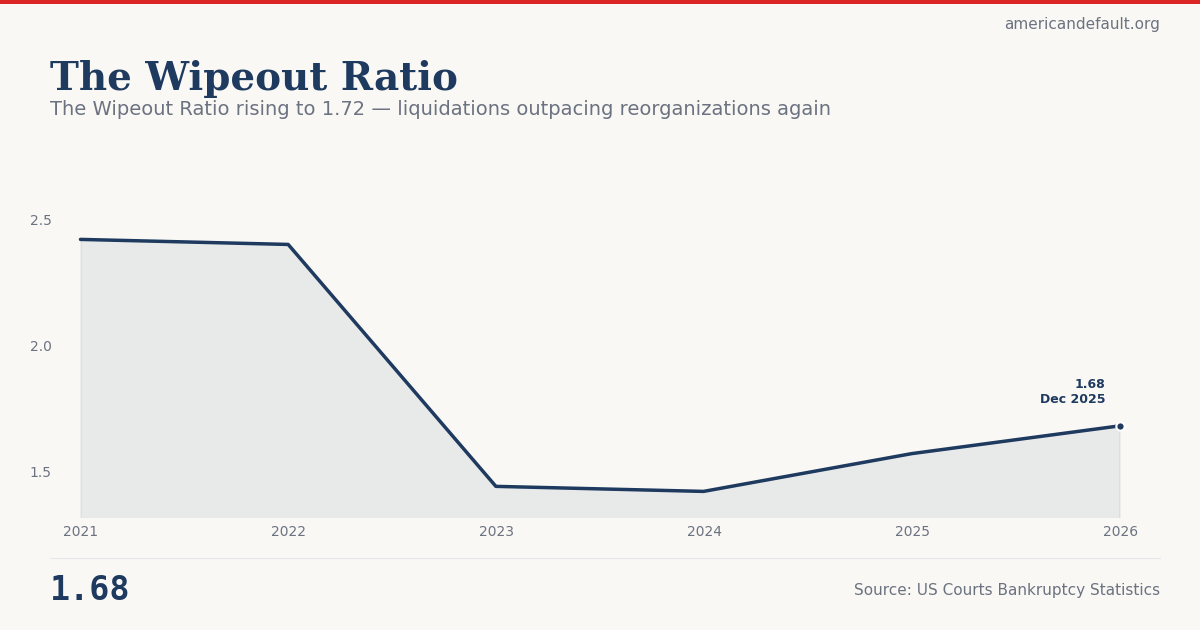
The ratio of Chapter 7 liquidation to Chapter 13 reorganization filings rose to 1.72 in 2025, up from 1.42 in 2023 and 1.57 in 2024, according to U.S. Courts data. Chapter 7 means surrendering non-exempt assets and discharging all qualifying debt — the option chosen when the math of repayment simply no longer works. The shift toward liquidation indicates that the typical bankruptcy filer is in worse financial condition than in prior periods. Source: U.S. Courts bankruptcy statistics (2025).
The shift toward total liquidation in bankruptcy signals that more families have crossed the line from struggling to starting over.
The ratio of Chapter 7 liquidation filings to Chapter 13 reorganization filings rose to 1.72 in 2025, up from 1.42 in 2023 and 1.57 in 2024, according to U.S. Courts bankruptcy statistics. In Chapter 13, filers propose a 3–5 year repayment plan and keep their assets. In Chapter 7, they surrender non-exempt assets and discharge their debts entirely. A rising ratio means more Americans are concluding that no repayment plan can work.
The distinction matters because it reveals the depth of financial distress. Chapter 13 requires sufficient income to make plan payments — when the ratio shifts toward Chapter 7, it indicates that filers' income can no longer cover even a reduced payment schedule. Bankruptcy Filings overall are up 20% year-over-year, but the shift within that total toward liquidation suggests the typical filer is in worse financial condition than in previous quarters.
The pattern connects directly to the buffer indicators. The Safety Net shows emergency savings at their lowest level in a decade, and Foreclosure Filings have risen 32% year-over-year. When savings are gone, debts are unmanageable, and home equity is insufficient, Chapter 7 isn't a choice — it's the only option that remains.
Explore Further
Is this happening to you?
If you had to file bankruptcy, would you want to keep your assets or start fresh?
How has The Wipeout Ratio changed over time?

| Period | Value | YoY Change |
|---|---|---|
| 2025 | 1.68 | +0.11 |
| 2024 | 1.57 | +0.15 |
| 2023 | 1.42 | −0.02 |
| 2022 | 1.44 | −0.96 |
| 2021 | 2.4 | −0.02 |
| 2020 | 2.42 | — |
Frequently Asked Questions
What is the Chapter 7 to Chapter 13 bankruptcy ratio?
The ratio was 1.72 in 2025, meaning for every family attempting a 3–5 year repayment plan under Chapter 13, nearly two families chose total liquidation under Chapter 7. The ratio has risen from 1.42 in 2023 to 1.72 in 2025.
What is the difference between Chapter 7 and Chapter 13 bankruptcy?
In Chapter 7, filers surrender non-exempt assets and discharge nearly all qualifying debts. In Chapter 13, filers propose a 3–5 year repayment plan and keep their assets. Chapter 7 is chosen when income is insufficient to support any repayment plan.
Why is a rising ratio significant?
A rising ratio toward Chapter 7 indicates deepening financial distress. Chapter 13 requires sufficient income to make plan payments. When the ratio shifts, it means more filers have income so low or debts so large that no repayment plan is feasible. They are choosing to start over entirely.
What does the wipeout ratio predict?
The wipeout ratio reflects the severity of distress among those already in bankruptcy. Combined with the 20% year-over-year increase in total filings, the rising ratio suggests that not only are more people filing, but each filer is in worse condition — their debts are further beyond what their income can service.
Where does the Chapter 7 vs. Chapter 13 data come from?
U.S. Courts publishes bankruptcy filing statistics broken down by chapter type. American Default computes the ratio by dividing total Chapter 7 consumer filings by total Chapter 13 consumer filings on a quarterly and annual basis.
Quick poll
Is this affecting you or your household?
Discussion
Get the numbers when they move.
New data drops, indicator updates, and ADI score changes — delivered when it matters. No spam.
or Create an Account for full access
Loading comments…