The Warning Light
72 — down from 72.9 a year ago, below the 80-point threshold that preceded every recession since 1967
What is the current The Warning Light?
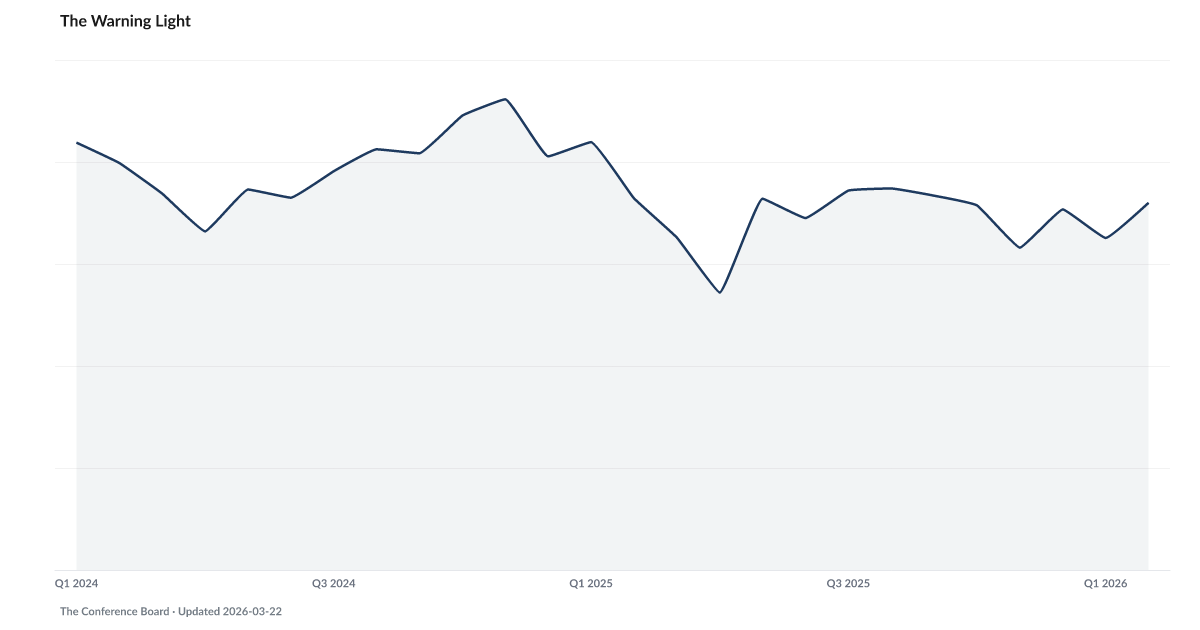
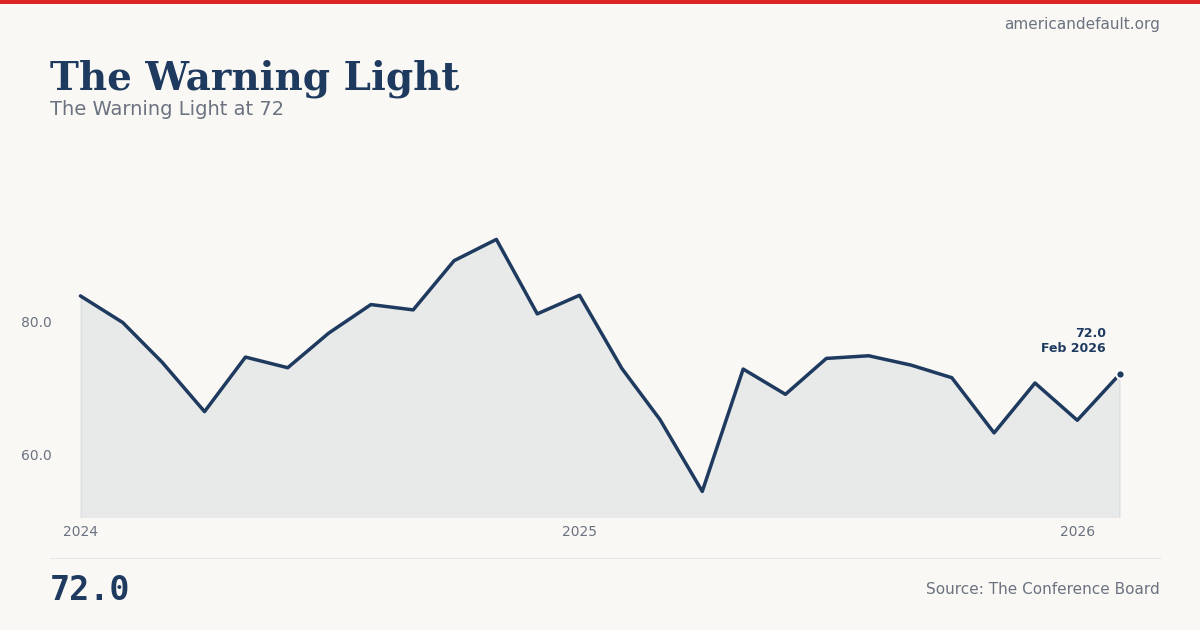
The Conference Board Consumer Expectations Index registered 72.0 in February 2026, well below the 80-point threshold that has preceded every U.S. recession since 1967. The index has been below this signal line continuously since February 2025 — a 13-month streak. The April 2025 reading of 54.4 marked the cycle low. Every prior sustained breach of the 80-point threshold has been followed by a recession within 6–12 months. Source: Conference Board (February 2026).
The Conference Board's expectations index has been flashing its recession signal for 13 consecutive months — every time this has happened before, a recession followed.
The Conference Board Consumer Expectations Index registered 72.0 in February 2026 — well below the 80-point threshold that has preceded every U.S. recession since 1967. The index has been below this threshold continuously since February 2025, making this a 13-month streak. The April 2025 reading of 54.4 marked the lowest point; while the index has bounced modestly since, it has not come close to clearing the signal line.
What distinguishes this indicator from pure sentiment surveys is its track record. The Conference Board expectations index specifically asks consumers about their outlook for income, business conditions, and employment over the next six months. When expectations fall below 80 and stay there, it has historically preceded GDP contraction by 6–12 months. The Mood Ring — Michigan's sentiment survey — corroborates the pattern: at 56.4, consumer sentiment remains at levels typically associated with recessionary periods.
The question is whether this time is different. Some analysts argue that the signal is distorted by political polarization, which has increasingly colored consumer survey responses. But The Tightening — the Chicago Fed's leverage conditions index — shows financial conditions tightening at the fastest pace in years, suggesting the pessimism is grounded in financial reality. The Buffer at 3.6% savings confirms that consumers have less cushion to absorb any downturn these expectations may be anticipating.
Explore Further
Is this happening to you?
Are you putting off a major purchase because you're unsure about the next six months?
How has The Warning Light changed over time?

| Period | Value | YoY Change |
|---|---|---|
| Feb 2026 | 72 | −0.90 |
| Jan 2026 | 65.1 | −18.80 |
| Dec 2025 | 70.7 | −10.40 |
| Nov 2025 | 63.2 | −29.10 |
| Oct 2025 | 71.5 | −17.60 |
| Sep 2025 | 73.4 | −8.30 |
| Aug 2025 | 74.8 | −7.70 |
| Jul 2025 | 74.4 | −3.80 |
| Jun 2025 | 69 | −4.00 |
| May 2025 | 72.8 | −1.80 |
| Apr 2025 | 54.4 | −12.00 |
| Mar 2025 | 65.2 | −8.60 |
Frequently Asked Questions
What is the Conference Board Consumer Expectations Index?
It measures consumers' six-month outlook for income, business conditions, and employment. A reading below 80 has preceded every U.S. recession since 1967. The current reading is 72.0 as of February 2026.
How long has the recession signal been active?
The index has been below its 80-point recession threshold continuously since February 2025 — 13 consecutive months. The April 2025 reading of 54.4 was the cycle low. While the index has bounced modestly, it has not come close to clearing the signal line.
Has this signal ever been wrong?
Every prior sustained breach below 80 has been followed by a recession within 6–12 months. Some analysts argue the current signal may be distorted by political polarization, which increasingly colors consumer survey responses. However, tightening financial conditions and depleted household savings suggest the pessimism is grounded in financial reality.
How does this differ from the Michigan consumer sentiment survey?
The Conference Board expectations index specifically asks about the six-month outlook, while Michigan measures broader sentiment about current and future conditions. Both are currently signaling distress: expectations at 72.0 and Michigan sentiment at 56.4. When two independent surveys agree, the signal is more reliable.
Where does the consumer expectations data come from?
The Conference Board publishes the Consumer Confidence Index monthly, based on a survey of approximately 3,000 households. The expectations component, which looks ahead six months, is the subindex tracked as a recession signal.
Quick poll
Is this affecting you or your household?
Discussion
Get the numbers when they move.
New data drops, indicator updates, and ADI score changes — delivered when it matters. No spam.
or Create an Account for full access
Loading comments…