Senior Loan Officer Survey: Banks Tightening Standards
Tracking improving relative to recent baseline.
What is the current Senior Loan Officer Survey: Banks Tightening Standards?
The Senior Loan Officer Opinion Survey (SLOOS) measures whether banks are making it easier or harder to get loans. A positive reading means banks are tightening standards, making credit harder to access; a negative reading means they are loosening. This captures the supply side of credit — even if demand exists, tightening standards can cut off borrowers and amplify financial distress. Source: Federal Reserve SLOOS (quarterly).
Senior Loan Officer Survey: Banks Tightening Standards at 0.0%
Tracking improving relative to recent baseline.
Explore Further
Is this happening to you?
Have you been denied credit or offered worse terms than you expected?
How has Senior Loan Officer Survey: Banks Tightening Standards changed over time?
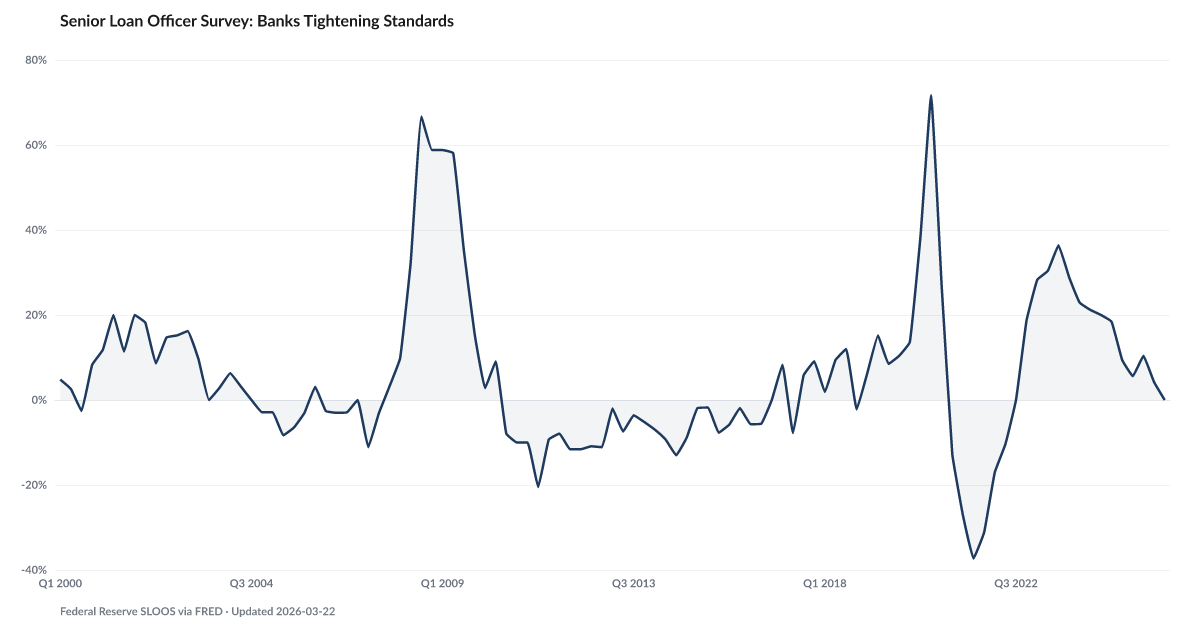
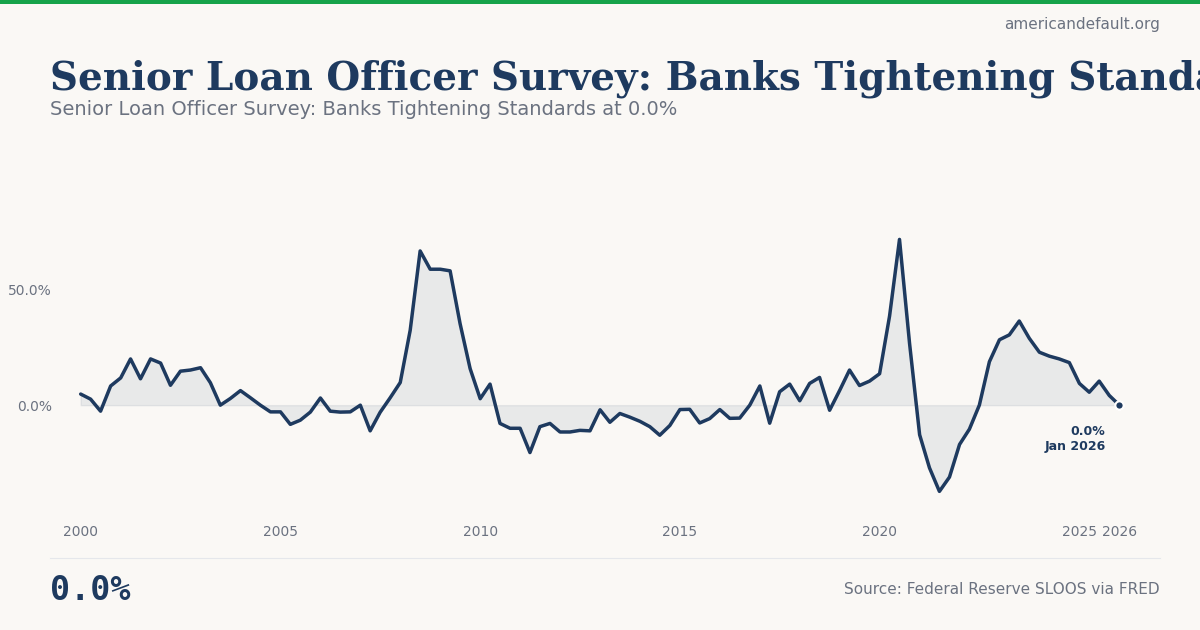

| Period | Value | YoY Change |
|---|---|---|
| Q1 2026 | 0% | −9.4 pts |
| Q4 2025 | 4.2% | −14.2 pts |
| Q3 2025 | 10.4% | −9.6 pts |
| Q2 2025 | 5.6% | −15.6 pts |
| Q1 2025 | 9.4% | −13.5 pts |
| Q4 2024 | 18.4% | −10.5 pts |
| Q3 2024 | 20% | −16.4 pts |
| Q2 2024 | 21.2% | −9.2 pts |
| Q1 2024 | 22.9% | −5.4 pts |
| Q4 2023 | 28.9% | +10.1 pts |
| Q3 2023 | 36.4% | +36.4 pts |
| Q2 2023 | 30.4% | +40.8 pts |
Frequently Asked Questions
What does the SLOOS measure?
The Senior Loan Officer Opinion Survey asks bank loan officers whether they are tightening or loosening lending standards. It captures the supply side of credit: even when consumers need to borrow, tighter bank standards can cut off access, forcing households toward higher-cost alternatives.
Why does credit tightening matter for households?
When banks tighten standards, marginal borrowers lose access to credit at reasonable terms. This pushes them toward credit cards (20.97% APR), Buy Now Pay Later, or payday lenders — or forces them to reduce spending, which can trigger the distress cascade tracked by other indicators.
Where does SLOOS data come from?
The Federal Reserve conducts the Senior Loan Officer Opinion Survey quarterly, surveying approximately 80 large domestic banks and 24 U.S. branches of foreign banks about changes in their lending standards and terms.
Quick poll
Is this affecting you or your household?
Discussion
Get the numbers when they move.
New data drops, indicator updates, and ADI score changes — delivered when it matters. No spam.
or Create an Account for full access
Loading comments…