Your Mortgage Didn't Change. Everything Around It Did.
Foreclosure filings are up 32% year-over-year, but the fixed-rate mortgage isn't the problem. The stress is coming from everything the mortgage was supposed to make predictable, insurance, taxes, escrow, and it's landing hardest on the borrowers the system was built to protect.

U.S. foreclosure filings reached 367,460 in 2025, up 14% from 2024, according to ATTOM Data Solutions. Still 25% below the 2019 baseline of 489,000 and 87% below the 2010 peak near 2.9 million. But the composition changed. FHA mortgage delinquency ran 11.79% in Q2 2026, while the Federal Reserve's bank-booked single-family rate held near 1.86%. The starts-to-completions ratio ran 4.75 to 1 in December 2025. The average time in foreclosure is 608 days. The fixed-rate mortgage held. Insurance, property taxes, and escrow rose around it, and the 2022-2023 FHA vintages absorbed the shock first. Source: ATTOM 2025 report, MBA National Delinquency Survey, Federal Reserve, NY Fed Household Debt and Credit Report.
In Indiana, the mortgage payment hasn’t changed. The thirty-year fixed rate a borrower locked in during 2022 is still exactly what it was on closing day. Same principal, same interest, same coupon printed on the same amortization schedule. The number on the first line of the monthly statement is, by design, the most stable number in American household finance. That was the whole point.
But the second line changed. And the third. The homeowner’s insurance premium re-priced after a round of catastrophe losses. The county reassessed property taxes. The utility bill climbed. The escrow payment, that bundled, automatically adjusted catch-all that sits beneath the fixed mortgage like a rising tide beneath a pier, absorbed every cost the fixed rate was supposed to render irrelevant. The pier stayed level. The water rose anyway. One number held still and everything adjacent to it did not, and FHA borrowers absorbed it first.
Starts and Completions Measure Different Flows
The national numbers still look modest. ATTOM Data Solutions reported 367,460 foreclosure filings on U.S. properties in 2025, up 14 percent from 2024 but still 25 percent below 2019 and 87 percent below the 2010 peak of nearly 2.9 million. If you stopped there, you’d conclude the system is functioning well within tolerance.
I’ve spent weeks reading through monthly ATTOM reports, and the aggregate framing is always the same: activity is rising, but levels remain historically low. “Normalization” appears in nearly every release. What stopped me was the question nobody in those reports asks: normalizing toward what? The pre-pandemic baseline included 2019’s 489,000 filings, which itself was the product of post-crisis tightening. The baseline before that was 2.9 million. “Normal” is not a fixed coordinate. It’s a direction, and the direction is up.
The ratio between properties receiving a foreclosure start notice and properties reaching a completed foreclosure compares two flows reported by ATTOM. In December 2025, the starts-to-completions ratio was 4.75 to 1. That ratio does not count properties still in process, show whether the outstanding stock is growing or shrinking, or predict future housing inventory. ATTOM separately reported that the average completed foreclosure had spent 608 days in the process.
The Escrow Trap
If the pipeline is the mechanism, the fuel feeding it is visible in one state more clearly than any other. Indiana is that state here, on a ranking we did not compute: in March 2026 two Indiana public-media outlets, WBOI and El Puente, reported Indiana’s foreclosure filing rate, the share of housing units with a filing, as the highest in the country. Both are relaying an industry ranking rather than an original measurement, and we hold no state-level foreclosure series to check it against, so it reads as their finding and not ours. What the reporting supports directly is the mechanism. Amy Nelson, Executive Director of the Fair Housing Center of Central Indiana, put it plainly. “Your mortgage might not be going up but your home insurance and your property taxes are,” Nelson explained.
The American homeownership model sold the thirty-year fixed-rate mortgage as a fixed cost of living. For decades, the gap between a fixed mortgage payment and a fixed housing cost was small enough to ignore. Insurance was cheap. Property taxes moved slowly. Utilities were stable. The escrow line on the statement was a rounding error. It isn’t anymore. The payment held, but everything around it moved. If your insurance doubled, your property taxes were reassessed upward, and your utilities climbed, is it still the same affordable house you bought?
The data says no. The answer arrives most visibly in the FHA population: first-time buyers, lower credit scores, smaller down payments, government-insured loans designed to make homeownership accessible to exactly the households with the least margin for error. The FHA delinquency rate hit 11.52% in Q4 2025, the highest since Q2 2021, according to the Mortgage Bankers Association’s National Delinquency Survey. One in nine FHA borrowers is now behind on payments. Marina Walsh, MBA’s Vice President of Industry Analysis, noted that “the most pronounced uptick was with FHA loans” and identified the 2022 and 2023 vintage years as the worst performers, loans originated when rates were highest and affordability most stretched.
The FHA 11.52% figure counts loans 30 or more days past due, the MBA’s standard measure. Against the delinquency rate the Federal Reserve reports for single-family mortgages booked at commercial banks (1.79% in Q4 2025, near historic lows), the FHA population is running nearly ten percentage points ahead of mortgages held on bank balance sheets. The borrowers with the thinnest buffers absorbed rate increases, insurance repricing, and tax reassessments simultaneously, and they are now showing up in the pipeline at rates the bank-held book does not register.
One in Nine FHA Borrowers Is Behind on Payments
FHA: Mortgage Bankers Association National Delinquency Survey. Bank-booked single-family: Federal Reserve Board of Governors data retrieved via FRED (DRSFRMACBS).
Two different cuts of the mortgage market, and they overlap. One line is FHA-insured loans in the Mortgage Bankers Association's servicer survey. The other is single-family mortgages booked at commercial banks. A bank's portfolio can hold FHA loans, so the gap compares two populations, not two holders.
What the 2010 Peak Actually Measured
Historical comparison is the first refuge of the reassuring analyst. The delinquency rate on single-family residential mortgages booked at commercial banks, the standard measure tracked by the Federal Reserve, stands at 1.79% as of Q4 2025. In Q1 2010, it was 11.48%. The current figure is not in the same universe as the Great Financial Crisis, and anyone who implies it is should be read skeptically.
But the comparison obscures as much as it clarifies. The 2010 peak measured something fundamentally different: a wave of payment resets on adjustable-rate and option-ARM mortgages, mass unemployment at 10%, and a securitization chain that had distributed risk so widely that nobody knew who held it. The loans themselves were the problem. Today the loans are performing largely as designed. The thirty-year fixed rate is doing exactly what it promised. The stress is coming from outside the mortgage contract, from costs the contract was never built to absorb.
The more useful baseline is 2019. The serious delinquency rate across all balances, 90-plus days, tracked by the New York Fed, reached 3.12% in Q4 2025, now above the 2019 average of 3.05% for the first time since the post-pandemic normalization began. That crossing matters more than any comparison to 2010 because it answers a different question: not “is this a crisis?” but “is the post-moratorium adjustment complete?” At 3.12%, the answer appears to be no. The line is still rising.
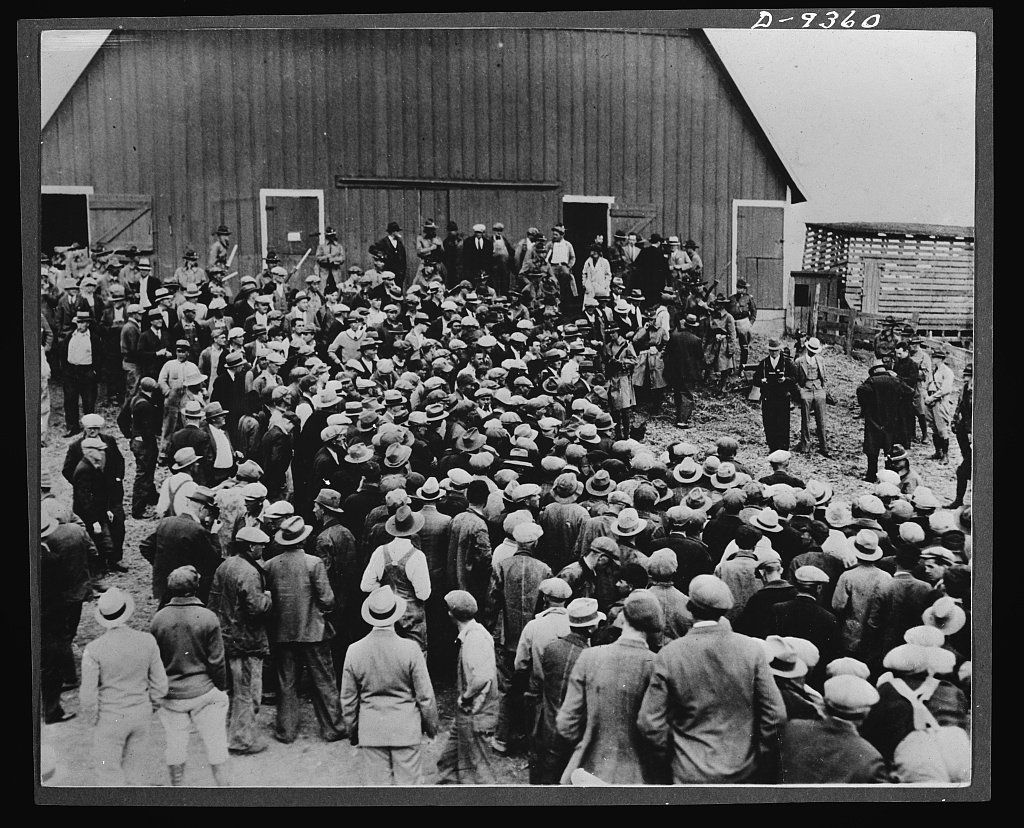
During the Great Depression, communities invented their own intervention. In 1933, as more than 200,000 farms underwent foreclosure, neighbors gathered at auction and placed bids of a penny, the “penny auction” phenomenon, where crowds sabotaged the legal process to return property to its original owners. Anyone who bid higher faced jeers and, often, threats. The foreclosure pipeline was short then, weeks from notice to gavel, and the community response was proportionally fast. Today the pipeline stretches 608 days on average, and in some states nearly a decade. The legal machinery that once destroyed families in weeks now takes years. The families at the end of it are just as dispossessed.
Serious Delinquency Has More Than Doubled Since Late 2022
Federal Reserve Bank of New York Household Debt and Credit Report
The pandemic drove serious delinquency to a floor of 1.41% in Q4 2022. Since then it has more than doubled, crossing the 2019 average of 3.05% in Q4 2025.
The Counterweight That Matters
Here is the honest uncertainty in the March 2026 snapshot: the foreclosure rise sits beside a substantial counterforce. Homeowner equity in the United States remains at historically elevated levels after a decade of price appreciation. A borrower who bought in 2019 or 2020 may be behind on payments but sitting on six figures of unrealized equity, enough to sell before the foreclosure process completes, enough to negotiate a modification, enough to exit without a deficiency judgment. Rob Barber, ATTOM’s CEO, made this point directly: “strong equity positions and more disciplined lending continuing to limit risk.” He is not wrong.
Equity and liquidity are different constraints. A homeowner in Indiana whose escrow payment has risen by several hundred dollars a month cannot eat their home equity to cover this month’s bill. Selling requires a functioning market, a willing buyer, and enough time to execute while the default process is already moving. Mirza Hodzic, managing director of BlackWolf Advisory Group, described what the accumulation looks like from the servicer side: “An 11-month run-up in foreclosure activity is exactly the kind of slow-building wave that stretches servicer capacity, not just in foreclosure departments but across the entire default ecosystem.” The operational tension is conversion speed: equity as sale or modification versus default as loss.
And then there is the vintage problem Walsh identified, the 2022 and 2023 FHA originations that locked in rates at the cycle’s peak. Those borrowers have the least equity (they bought near the top of the price curve), the highest rates (originated when the Fed was still tightening), and the thinnest margins (FHA by definition). They are the population least able to sell their way out and most exposed to the escrow creep Nelson described. Q4 2025 FHA delinquency at 11.52% against the Federal Reserve’s 1.79% rate for bank-booked single-family mortgages reveals two different housing markets operating under the same name. The 2022-2023 vintage is the stress-test population in this snapshot: high-rate FHA borrowers with limited equity, high escrow exposure, and thin payment buffers.
The Pier and the Water
The fixed-rate mortgage was supposed to be the anchor, the stable monthly number around which a household could build a life. In the narrowest technical sense it still is. But everything it was supposed to stabilize has moved: insurance premiums re-priced, property taxes reassessed, escrow balances climbing quarter after quarter. The current analytical distinction is contained stress pocket versus leading-edge signal, with the equity buffer as the unresolved pressure point.
The indicators that will answer it, foreclosure starts against completions, the CoreLogic early-stage transition rate, the FHA delinquency trajectory, feed the composite picture the American Distress Index tracks across its five domains.
Refresh Trace
2026-09-03| Recently changed indicator | Source | Period | Snapshot change |
|---|---|---|---|
| Delinquency Rate on Single-Family Residential Mortgages, All Commercial Banks | Board of Governors data retrieved via FRED | 2026-Q2 | -0.03 percentage points |
| The Pipeline | ATTOM Data Solutions | 2026-06 | +0.74 |
| Foreclosure Filings | ATTOM Data Solutions | 2026-Q2 | -17 percentage points |
| SNAP (Food Stamp) Enrollment | USDA Food and Nutrition Service | 2026-05 | -448968 |
| Initial Unemployment Claims (SA) | U.S. Department of Labor data retrieved via FRED | 2026-08-15 | -3000 |
Key Metrics
For researchers and journalists. All data sourced as noted.
| Metric | Value | Period | Source |
|---|---|---|---|
| Foreclosure filings YoY change | 32% | 2026-Q1 | ATTOM Data Solutions |
| Annual foreclosure filings (2025) | 367,460 | 2025 | ATTOM Data Solutions |
| Starts-to-completions ratio | 4.75:1 | 2025-12 | ATTOM Data Solutions |
| Average days in foreclosure process | 608 | 2025-Q3 | ATTOM Data Solutions |
| FHA delinquency rate | 11.52% | 2025-Q4 | MBA National Delinquency Survey |
| Bank-booked mortgage delinquency rate | 1.78% | 2025-Q4 | Board of Governors data retrieved via FRED |
| Serious delinquency rate (all balances, 90+ days) | 3.12% | 2025-Q4 | NY Fed Household Debt and Credit Report |
| Cotality current-to-30-day mortgage transition rate | 0.70% | 2025-09 | CoreLogic / Cotality Monthly Report |
| 2019 average serious delinquency rate | 3.05% | 2019 avg | NY Fed Household Debt and Credit Report |
| All-time peak bank-booked mortgage delinquency | 11.49% | 2010-Q1 | Board of Governors data retrieved via FRED |
Frequently Asked Questions
How many foreclosure filings happened in 2025?
ATTOM Data Solutions reported 367,460 foreclosure filings on U.S. properties in 2025, up 14% from 2024. That figure is 25% below the 2019 baseline of 489,000 filings and 87% below the 2010 peak of nearly 2.9 million. ATTOM's framing calls this 'normalization,' but the 2019 baseline was already the product of post-crisis tightening. The direction is up, and the composition is concentrated in borrowers with the thinnest buffers.
Does Indiana have the highest foreclosure rate in the country?
That ranking is reported, not ours. In March 2026 two Indiana public-media outlets, WBOI and El Puente, reported Indiana's foreclosure filing rate, the share of housing units with a filing, as the highest in the country. Both were relaying an industry ranking rather than an original measurement. American Default tracks foreclosure filings nationally and holds no state-level series, so we cannot confirm the ranking against data of our own. What the reporting does support is the mechanism. Amy Nelson, Executive Director of the Fair Housing Center of Central Indiana, explained it: the mortgage itself has not risen, but homeowner insurance and property taxes have. The thirty-year fixed rate held. The escrow line beneath it climbed. Lower-income borrowers absorbing insurance repricing and tax reassessments simultaneously ran out of room first. FHA borrowers, with the thinnest margins, are disproportionately represented.
What is the foreclosure starts-to-completions ratio right now?
In December 2025, nearly five properties received a foreclosure start notice for every one that completed the process: a 4.75-to-1 ratio. The average time in the foreclosure process is 608 days, and in Louisiana nearly ten years. The pipeline does not move at the speed of distress. It moves at the speed of courts, servicers, and state statutory timelines. A homeowner who fell behind in early 2024 may not lose the house until 2026 or later.
Is current foreclosure activity comparable to the 2008 crisis?
No, not in magnitude. The bank-booked mortgage delinquency rate tracked by the Federal Reserve stands at 1.86% as of Q2 2026, against 11.48% at the Q1 2010 peak. But the 2010 peak measured a different shock: adjustable-rate resets, 10% unemployment, and securitization chains that distributed risk to unknown holders. The current pressure is coming from outside the mortgage contract itself. The NY Fed's serious delinquency rate reached 3.12% in Q4 2025, above the 2019 average of 3.05% for the first time since post-pandemic normalization began.
Why is FHA delinquency a warning signal within current foreclosure data?
FHA delinquency ran 11.79% in Q2 2026, per the MBA National Delinquency Survey. The Federal Reserve's bank-booked single-family rate, at 1.86%, sits 9.93 points below. MBA's Marina Walsh identified the 2022 and 2023 vintage FHA loans, originated when rates were highest and affordability most stretched, as the worst performers. These borrowers have the least equity, the highest rates, and the thinnest margins. They are showing up in the pipeline at rates the conventional market cannot see from where it sits.
Suggested Citations
"The American homeownership model sold the thirty-year fixed-rate mortgage as a fixed cost of living. For decades, the gap between a fixed mortgage payment and a fixed housing cost was small enough to ignore." — American Default Research, April 2026.
"One in nine FHA borrowers is now behind on payments." — American Default Research, April 2026.
Data Sources
ATTOM Data Solutions
Foreclosure Filings YoY Change
CoreLogic / Cotality Monthly Report
Current-to-30-Day Mortgage Transition Rate
Mortgage Bankers Association National Delinquency Survey
FHA Mortgage Delinquency Rate
Board of Governors data retrieved via FRED
Delinquency Rate on Single-Family Residential Mortgages
NY Fed Household Debt and Credit Report
Serious Delinquency Rate (90+ Days, All Balances)
American Distress Index
See methodology.
Loading comments…