The Pipeline
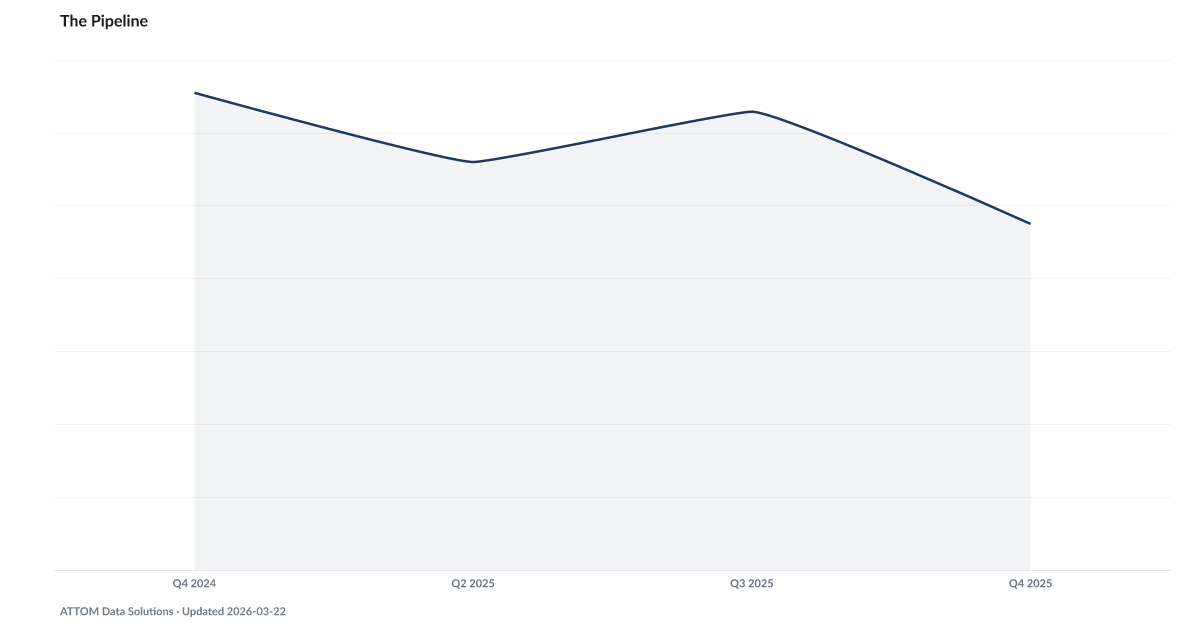
ATTOM starts-to-completions ratio; the comparison does not establish the outstanding foreclosure inventory
What is the current Pipeline reading?
Foreclosure starts versus completions compares two flows reported by ATTOM Data Solutions: properties receiving a foreclosure start and properties reaching a completed foreclosure during the reporting period. The ratio does not measure the stock of properties still in process, how long they remain there, or future housing inventory. Source: ATTOM Data Solutions.
ATTOM reported 5.5 times foreclosure starts for each completed foreclosure in June 2026.
ATTOM reports foreclosure starts and completed foreclosures as separate monthly counts. A completed foreclosure is a lender repossession, or REO.
The ratio divides starts in a reporting period by completed foreclosures in that period. It does not follow the same properties from initiation to completion or count the full inventory of outstanding foreclosure cases.
At 5.5 times in June 2026, ATTOM's ratio reports how many new starts occurred for each completed foreclosure. A value above one means starts outnumbered completions; a value below one means completions outnumbered starts.
Because starts and completions are different flows with a time lag, the ratio alone cannot establish whether the outstanding foreclosure inventory is building or draining. Read it alongside ATTOM's separate start, completion, and total-filing counts.
Explore Further
Is this happening to you?
Do you know someone who has lost their home to foreclosure?
How has The Pipeline changed over time?

Most affected counties
Counties with the highest default and legal scores in the County Distress Index.
Explore all 3,144 counties →| Period | Value | YoY Change |
|---|---|---|
| Jun 2026 | 5.49x | -0.11x |
| Dec 2025 | 4.75x | -1.8x |
| Sep 2025 | 6.29x | — |
| Jun 2025 | 5.6x | — |
| Dec 2024 | 6.55x | — |
Frequently Asked Questions
What does foreclosure starts vs. completions measure?
It compares properties receiving a foreclosure start with properties reaching a completed foreclosure during the reporting period. The two counts are separate flows; their ratio is not the number of properties still in process.
Why does the pipeline ratio matter?
The ratio describes the balance between two reported foreclosure flows in the period. Assessing the outstanding pipeline, time in process, or future inventory requires separate stock and transition data that this ratio does not provide.
Where does foreclosure starts and completions data come from?
ATTOM Data Solutions tracks foreclosure activity from county recorder offices nationwide, broken down by default notices (starts), scheduled auctions, and bank repossessions (completions). The starts and completions counts used here are published monthly.


Quick poll
Is this affecting you or your household?
Discussion
Get the numbers when they move.
New data drops, indicator updates, and ADI score changes — delivered when it matters. No spam.
or Create an Account for full access
Loading comments…