The Arithmetic
Des Moines County, Iowa

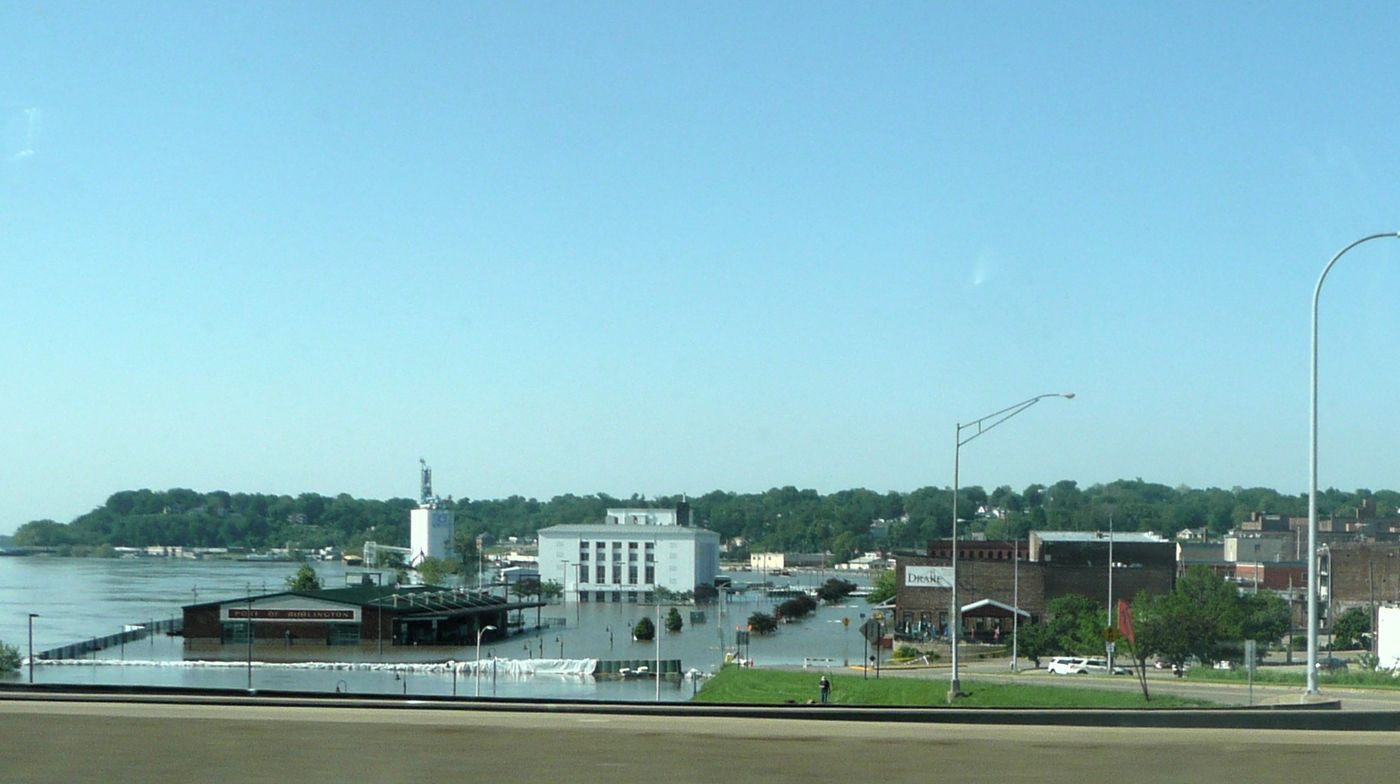
Burlington made backhoes for 87 years. The plant closed. The arithmetic that held the county together stopped working.
The town that made the tools
Burlington, Iowa made backhoes for 87 years. CNH Industrial’s Case Construction plant opened in 1937 and became the anchor of the local economy. At peak, it employed roughly 2,000 people. The machines that came off the line dug the foundations for houses, shopping centers, highways. Tools for building things.
In November 2024, CNH announced the plant would close. By mid-2026, it will be gone. Two hundred nine jobs, the last ones left. The company saves $17 million a year on annual profits exceeding $2 billion.
The town that made the tools of construction is being taken apart by arithmetic.
Less than one percentage point
Mayor Jon Billups called it a pivot point. “We’ve had generations of people work at Case in Burlington, Iowa, so to lose them really is devastating news.” Generations is the right word. Fathers, sons, grandsons on the same line. The kind of continuity that made a town feel permanent.
At a rally in November 2025, UAW President Shawn Fain put the math in public. “This company told us just last week that they’re closing this plant because it’ll save them just under $17 million dollars a year on an annual profit of over $2 billion dollars. For less than one percentage point of their profits, they want to dump an economic bomb on the Burlington community.”
Less than one percentage point. That is the price of a town’s largest private employer.
The rent isn’t the problem
Here’s where the housing data becomes the story. Des Moines County’s dominant CDI domain is Debt Burden, scoring 74.31 out of 100. That sounds like a housing crisis. Look closer and it’s stranger than that.
A two-bedroom apartment rents for $1,063 a month. That is not expensive. The median household income is $60,599, about 88% of the Iowa median. That is not destitute. On paper, the numbers work.
But 32.4% of renters spend more than half their income on housing. That’s the 99th percentile nationally. Only one in a hundred American counties has a higher share of renters drowning in housing costs.
The arithmetic breaks on the wage side. Average weekly pay is $1,014. For the people at the median and below — the renters, the service workers, the people who didn’t get the manufacturing wage — a thousand-dollar rent against a thousand-dollar paycheck is the math that doesn’t close.
A regional outlier in a healthy state
Des Moines County is the second most distressed county in Iowa. That distinction matters because Iowa is, by national standards, a low-distress state. Most of its 99 counties score below the moderate range. Only a handful, including Des Moines County, reach moderate county distress. None reach high county distress.
Every county bordering Des Moines County is less distressed. Lee County to the south, 40.0. Henry County to the northwest, 31.7. Louisa County to the north, 26.6 — half the score. Burlington concentrates the region’s economic pain the way a river town concentrates the river. Everything collects here.
The debt measures sit alongside it. A quarter of residents — 24.7% — carry debt in collections, median amount $2,299. Auto loan delinquency sits at the 69th percentile. Bankruptcy filings run 167 per 100,000 residents, with 81% recorded under Chapter 7. These aggregate measures do not track the same people and do not establish filers’ income, assets, motives, eligibility, or case outcomes.
From making tools to managing consequences
I’ve written enough of these to know that the place where the data gets quiet is often the place that matters most. Des Moines County’s uninsured rate is 4.0%, the 8th percentile nationally. Almost nobody lacks coverage. Great River Health System operates three hospital campuses and employs 2,700 people. Healthcare is now the county’s largest employment sector.
There’s something in that. The factory that built machines for constructing things is closing. The hospital that keeps people alive is the new anchor. The economy pivoted from making tools to managing consequences.
Aldo Leopold was born in Burlington in 1887. He grew up on the bluffs above the Mississippi, watching birds, learning to see landscape as something alive. He went on to write A Sand County Almanac, the book that gave American conservation its ethical framework. His central argument: “We abuse land because we regard it as a commodity belonging to us. When we see land as a community to which we belong, we may begin to use it with love and respect.”
Leopold was writing about soil and watersheds. But the principle scales. A factory belongs to a community until the quarterly math says otherwise. A workforce belongs to a town until the savings on the spreadsheet outweigh the cost of keeping it.
What Burlington rebuilds around next
Des Moines County scores 54.65. Moderate county distress. The 1,338th most distressed county in the United States, out of 3,144. Second in Iowa.
The Iowa Army Ammunition Plant still sits on 19,000 acres west of town. Established in 1941, it produced munitions through every American conflict since. It is also an EPA Superfund site. Business applications hit 328 in 2024, up 44% from 2019. The Greater Burlington Partnership just hired a regional workforce director. The Snake Alley brick road, built in 1894 up the bluff from the river, still twists through the old town. Things are being tried.
Burlington has been here before. It was Iowa’s territorial capital in 1838, lost the designation two years later, rebuilt around the railroad, rebuilt around manufacturing, and now has to rebuild around whatever comes next. The town’s most famous son spent his life arguing that a community is more than what it produces. The question is whether the economy agrees.