The Foundry
Wallowa County, Oregon

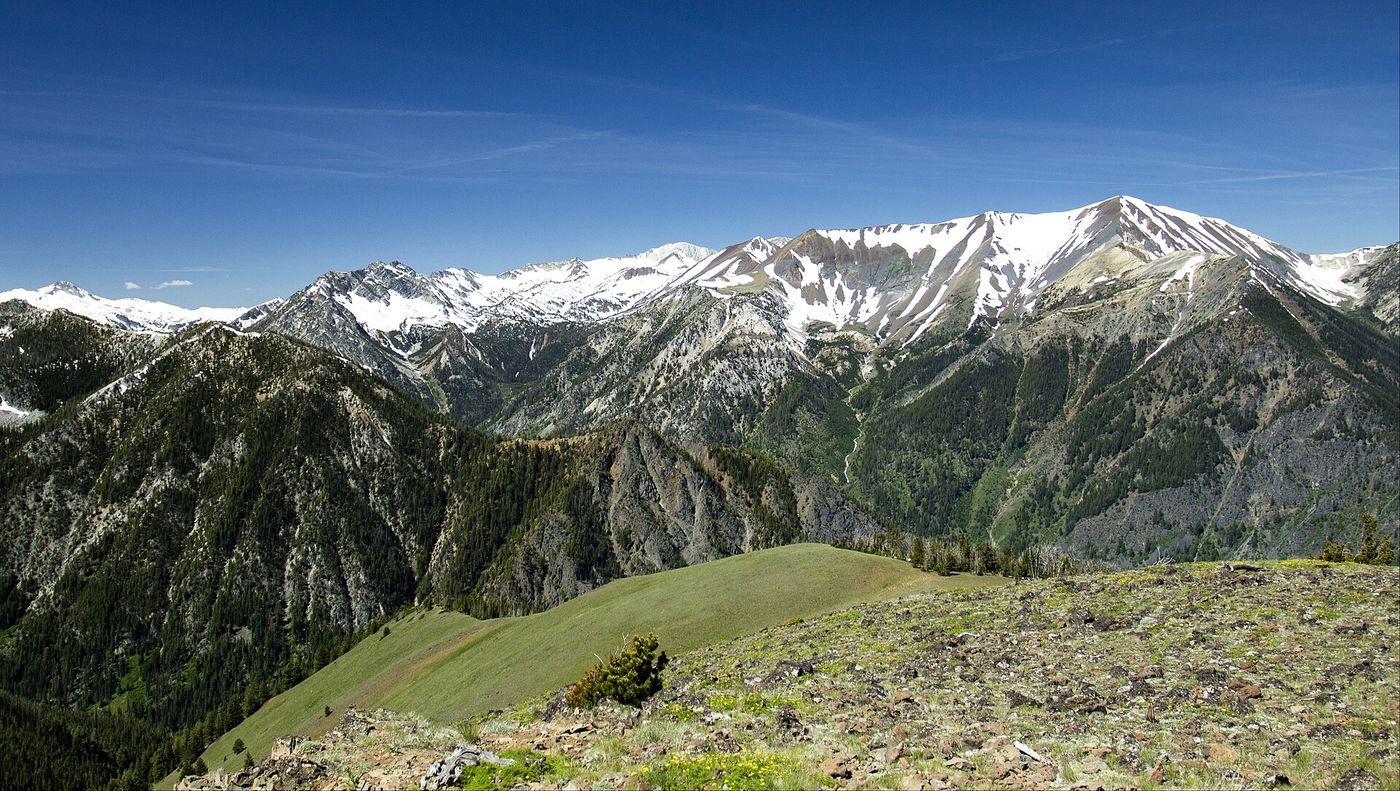
Three bronze foundries in a county of 7,674 people. Fifty-six percent national forest. The decisions about it are made in Portland.
A foundry in a forest
Every tourist who visits the World War II Memorial in Washington walks past bronze cast in a town of 1,000 people in northeast Oregon. Valley Bronze of Joseph produced 56 wreaths, 735 flag-motif grates, and the flagpole base. Forty tons of metalwork. A $2.5 million contract that peaked at 57 workers. The cases holding the Declaration of Independence and the Constitution in the National Archives Rotunda were cast here too.
The county where this happens has 7,674 people, a labor force of 3,704, and an average weekly wage of $1,012. In 2025, the Oregon Legislature introduced a bill declaring an economic emergency in Wallowa County, proposing a development board funded by state lottery revenue. As of April 2026, HB 2376 remains in committee.
What ships out, what stays
Wallowa County is a foundry. Three bronze foundries operate in a county of 7,674 people. Valley Bronze, established 1982. Joseph Bronze. Parks Bronze. More than 100 workers casting sculptures that sell for $5,000 to $300,000. When the county’s three sawmills closed between 1994 and 2001, the transition didn’t follow the standard script. No mass foreclosure wave. Laid-off timber workers learned lost-wax casting. Joseph became Oregon’s first designated Art and Culture town.
But a foundry is a place where the finished product ships out. The bronze ships to Washington. The timber shipped to markets. Fifty-six percent of the county is national forest. The decisions about it are made in Portland. And the graduates. Ninety-five percent four-year graduation rate, the highest in Oregon. Two-thirds of children born between 1978 and 1983 no longer live here. The county makes extraordinary things. The extraordinary things leave.
The 92nd percentile of 3,704 people
Here’s what the CDI makes visible that the proposed emergency declaration doesn’t. Wallowa County’s highest-scoring distress domain by far is Labor, at 91.57 — an unemployment percentile near the top of the national distribution. The American Community Survey puts the disability rate at 19.6%, the 79th percentile nationally. But Delinquency, the domain that usually drives distress in counties with high unemployment, scores 27.05. Credit card delinquency sits at the 23rd percentile of distress. Subprime borrowers, the 10th. Auto-loan delinquency, the 49th — the only Delinquency indicator that reaches the national midpoint. Twelve bankruptcies in all of 2025, a rate of 156.4 per 100,000.
The Bureau of Labor Statistics puts the unemployment rate at 5.5%, the 92nd percentile. But the labor force is 3,704 people. That 92nd percentile is 203 people.
The 65-point gap between the Labor domain at 91.57 and the Delinquency domain at 27.05 is the signature of a county that adapted to low income by not borrowing. Census SAIPE puts median household income at $61,173, about 89% of Oregon’s median. Homeownership is 76.4%. The Debt Burden domain scores 40.09 — below the national midpoint, with severe renter cost burden at the 17th percentile. People aren’t stretched because they didn’t extend.
That doesn’t mean the county is well. The graduates leave. So do the therapists. An Oregon Community Foundation profile found Wallowa has one of the state’s three highest suicide rates and half the average number of mental health professionals. Forty-three percent of parents are single, the second-highest rate in Oregon. The distress is real. It just doesn’t borrow.
The valley before it was named Joseph
At the north end of Wallowa Lake, a 5-acre plot holds the remains of Tuekakas, Old Chief Joseph, leader of the Walwama band of Nez Perce, who considered this valley home for thousands of years. He died in 1871. In 1886, local property owners desecrated the grave and removed his skull as a souvenir. His son, Young Chief Joseph, and leaders of several Nez Perce bands led roughly 750 people on a 1,170-mile flight in 1877 rather than accept removal to a reservation. They surrendered at Bear Paw, Montana. Were sent to Oklahoma, then to the Colville Reservation in Washington. Never allowed to return.
The town three miles south of the gravesite is named Joseph.
In December 2020, the Nez Perce Tribe purchased 148 acres in the Wallowa Valley. Am’saaxpa, “Place of Boulders.” A traditional village site with three-quarters of a mile of river frontage. On July 29, 2021, more than 150 Nez Perce rode to the land to bless it. Each July since 1991, descendants have gathered for Tamkaliks, a three-day celebration at permanent grounds south of town. Few tribal members live in the county year-round. They keep coming back.
The institutions that didn’t leave
The Enterprise school’s biomass boiler burns wood chips from logging debris, saving $120,000 a year and displacing 40,000 gallons of heating oil. The wood that no longer feeds mills heats the school that produces Oregon’s highest graduation rate. Not everything ships out.
Wallowa Memorial Hospital, 25 beds, Level IV trauma, has been named a Top 20 Critical Access Hospital by the Chartis Center for Rural Health, 2019-2024. The only Oregon facility on the list. Winding Waters Clinic, a federally qualified health center since 2015, operates on a sliding-fee scale across three locations. Wallowa Resources, a nonprofit since 1996, runs forest restoration, workforce development, and community energy projects. The institutions stay.
The part that complicates the foundry story is the housing. Twenty percent of homes are classified as seasonal use. Working Homes LLC, an offshoot of Wallowa Resources, holds an option on a 21-acre parcel in Joseph for workforce housing at 60-120% of area median income. The EM&M Building in Enterprise received a $500,000 federal grant in 2026 for refurbishment into 26 apartments and 6 commercial spaces. Businesses report they cannot hire because workers cannot find places to live. The houses exist. They’re just not for the workforce.
A moderate-low score the debt numbers undercut
Wallowa County scores 49.04 on the County Distress Index — moderate-low county distress, 1,639th of 3,144. Within Oregon it lands 29th of 36, less distressed than its three named neighbors: Union at 53.0 and Baker at 52.9 carry moderate county distress; Umatilla at 60.1 carries moderate-high county distress. Wallowa’s moderate-low label is almost entirely the Labor domain. Strip the unemployment percentile out and the rest of the balance sheet reads like a far quieter county.
The domains to watch are Labor (91.57) and Safety Net & Buffer (52.14). The county’s distress rests almost entirely on that 92nd-percentile unemployment reading, and it sits on a bind the housing data spells out: the foundries have orders, and the seasonal homes that take up a fifth of the stock leave the workers who would fill those jobs with nowhere to live. The 7th-percentile debt-in-collections rate is the data signature of a place that learned not to borrow because borrowing requires believing the income will be there next year.