The Extraction County
Glades County, Florida

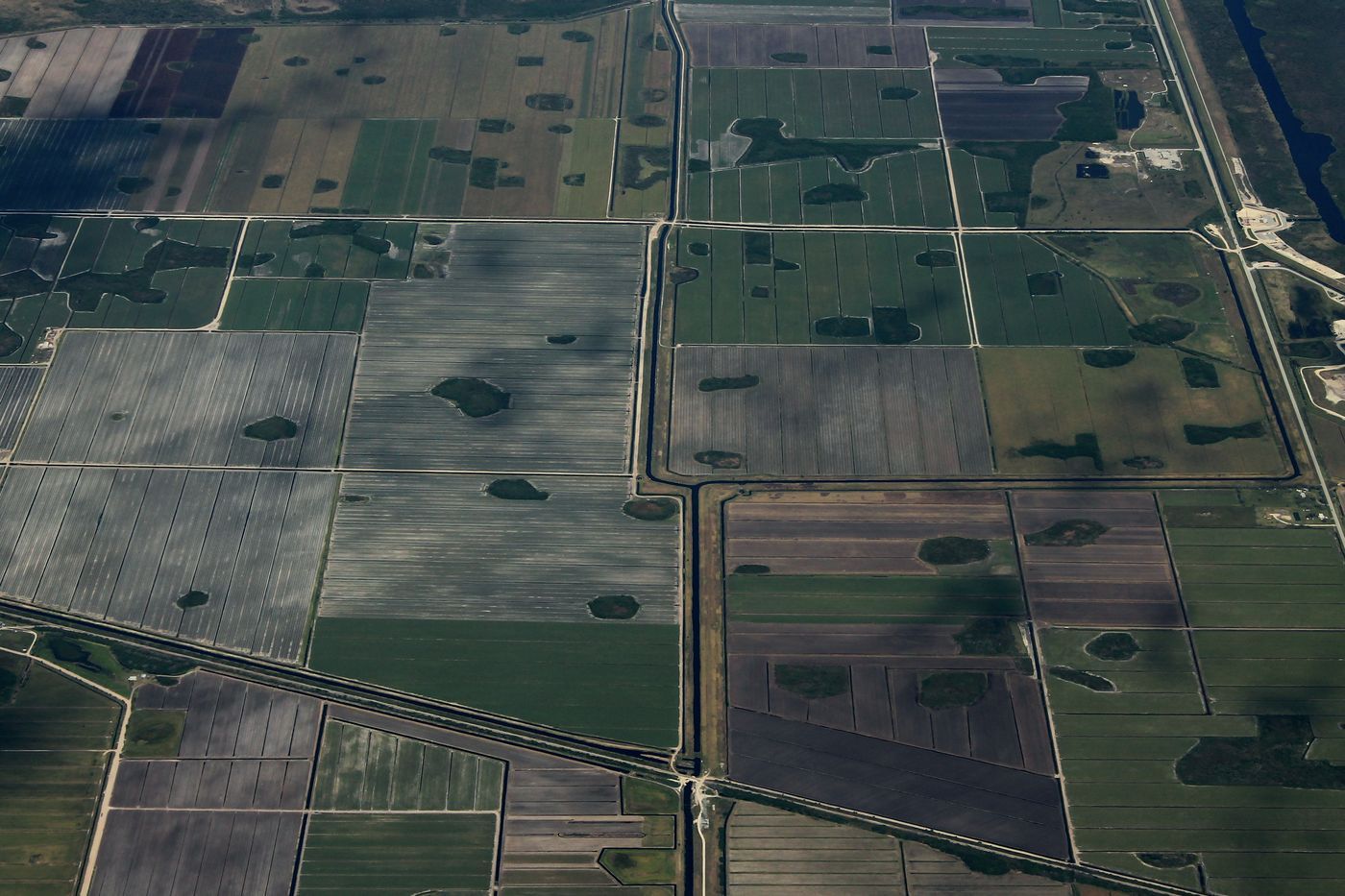
Sugar, prisoners, clean water. Everything Glades County produces is for somewhere else. There is no hospital.
A county of 12,786 people. 1,425 beds.
The largest employer in Glades County, Florida is a detention center. The second-largest is a prison.
This is a county of 12,786 people on the southwest shore of Lake Okeechobee. Eight hundred square miles of cattle ranches, sugarcane fields, and mobile homes, connected to the rest of Florida by a two-lane highway. There is no hospital. One in five residents has no health insurance. The nearest emergency room is thirty miles away, in Clewiston.
But there are 1,425 beds for people who can’t leave.
The largest employer is the jail
The Glades County Detention Center, operated by the county sheriff, holds 440 beds. Roughly 89% of them house ICE immigration detainees. In February 2022, seventeen members of Congress called for the facility’s closure, citing documented sexual abuse, racist abuse, medical neglect, and a carbon monoxide leak. The facility stayed open.
Down the road, the Moore Haven Correctional Facility — a 985-bed private prison run by the GEO Group — holds state inmates. GEO Group reported $2.4 billion in revenue in 2024. Moore Haven is the kind of place that shows up in their quarterly earnings.
Together, the two facilities maintain one incarceration bed for approximately every nine residents. The county’s gender ratio — 57.6% male, 42.4% female — doesn’t reflect the people who live there by choice. It reflects the people who can’t leave.
The healthcare desert becomes credit data
Glades doesn’t have one bad CDI domain. It has three stacked — Debt Burden at 92.08, Labor at 91.57, and Safety Net & Buffer at 78.01. The prison economy distributes damage across every layer the data can see.
The healthcare desert shows up as money. The uninsured rate is 20.4%, the 95th percentile nationally. Credit card delinquency sits at the 85th percentile. A third of the population — 32% — has debt in collections, median $3,131. People without insurance, in a county without a hospital, carrying medical debt from the places they had to drive to when something went wrong. Then the medical debt becomes the credit card. Then the credit card goes delinquent.
Labor and the direct-need domain pick up the employment and income sides. Unemployment runs at the 92nd percentile nationally. Within Safety Net & Buffer, disability and household income are elevated, and the uninsured rate is at the 95th percentile. SNAP participation, retained as context rather than a CDI member, is 16%. Median household income is $55,240 — 83% of the Florida median. The Florida Department of Health operates a clinic in Moore Haven that offers immunizations and WIC vouchers but cannot treat a heart attack.
Homeownership that isn’t wealth
Debt Burden is the highest domain of all, at 92.08, and it moves through a paradox. Glades County’s homeownership rate is 79.7%. That sounds like stability. Then you learn that 54% of the housing stock is mobile homes.
People own their homes here because a mobile home on a quarter-acre is what $137,000 buys in inland Florida. But 33.6% of renters spend more than half their income on housing — the 95th percentile nationally. The people who own are fine. The people who rent are drowning. And the housing itself — a 1990s manufactured home anchored to a lot that floods when Lake Okeechobee rises — depreciates.
A third of all housing units are vacant. In a county with a 17% poverty rate and a median household income of $55,240 — 83% of the Florida median — the vacancies aren’t vacation homes. They’re the houses nobody came back to.
Sugar leaves, runoff stays
Sugarcane has run through this soil for a century. U.S. Sugar Corporation, headquartered in neighboring Clewiston — “America’s Sweetest Town” — farms 230,000 acres across Hendry, Glades, Martin, and Palm Beach counties. The company is the largest sugarcane producer in the United States, employing 2,500 people across the region. The sugar leaves. The runoff stays, flowing into Lake Okeechobee and eventually the Everglades.
The Brighton Seminole Indian Reservation occupies 36,000 acres of northeast Glades County — roughly 7% of the county’s total land area. The Seminole Tribe operates a casino there, with 375 slot machines and a poker room. The casino generates revenue. Whether that revenue reaches the 12,786 people on the census rolls outside the reservation is a different question.
And then there’s the quiet number. Business applications in Glades County hit 200 in 2024, up from 87 in 2019. That’s a 130% increase. The schools earned an A rating from the Florida Department of Education in September 2025. A new elementary school opened in December 2025 — the first in fifty years.
Something is growing here. Whether it grows faster than the weight of everything else is the open question.
The neighbors tell the same story
Most of Glades County’s neighbors carry high or very high county distress. Hendry to the south, 79.1. DeSoto, 78.5. Highlands, 82.1. Okeechobee, 76.7. The outlier is Martin County at 52.5, moderate county distress — a reminder that the coastal edge of this geography is a different country from the interior.
Glades County scores 74.71. High county distress. The 321st most distressed county in the country, out of 3,144 — more distressed than 89% of them. 24th of 67 in Florida. The story behind the score has not changed.
The county produces sugar for the nation’s grocery shelves, holds immigrants for the federal government, incarcerates state prisoners for a publicly traded corporation, and sends its water south to restore the Everglades. The products leave. The revenue leaves. The runoff, the medical debt, and the people without insurance stay.
One in nine residents is a bed in a facility. One in five has no coverage. One in three carries debt in collections. And somehow, the schools just earned an A. The indicator to watch is business formation — 200 applications in 2024, up 130% from 2019 — running against everything else in the data. Whether it’s a signal or a blip depends on whether the county can build something that stays.