The Gin
Dunklin County, Missouri

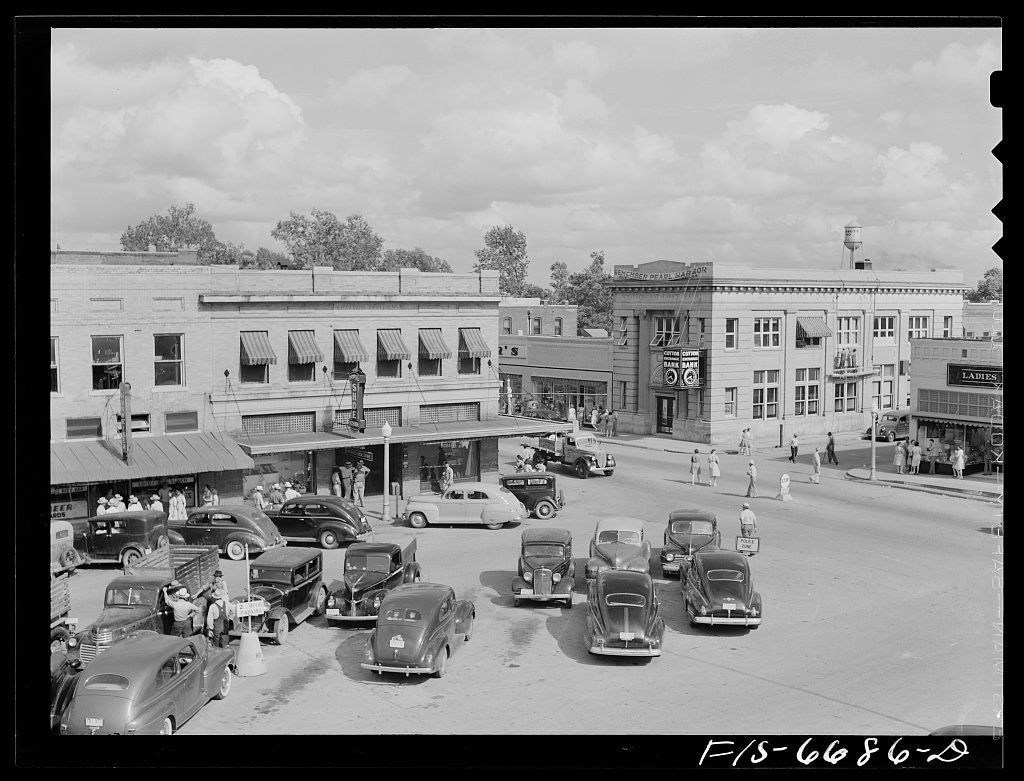
A county that produces $293 million in cotton and soybeans, exports four professional musicians from a single small town, and hasn’t had a hospital in nearly eight years. CDI 81.89, very high county distress, 105th of 3,144 counties. The gin separates what’s valuable from where it was grown.
What began in a cotton gin
The Greenbrier Companies railcar plant in Kennett, Missouri, began in a cotton gin. The company says so itself: “what began in a former cotton gin in Senath, MO, has grown into a thriving frame and parts plant.” The building that once separated cotton fiber from seed now assembles railcar components. Two hundred seventy-five workers across three shifts.
In January 2026, Greenbrier filed a WARN Act notice. Ninety-four employees furloughed, starting in March. The building has been through three economic lives — growing cotton, ginning cotton, making railcar parts — and each transition employed fewer people than the last.
I wrote Pemiscot County, one county south of here, a few weeks ago. Pemiscot is the most distressed county in Missouri and among the worst in America, and its metaphor was drainage — wealth flowing out like water through engineered ditches. Dunklin County is different. A drainage is passive. A gin is a machine. Someone feeds the raw material in and someone collects what’s valuable on the other side. For more than a century, the valuable part has been leaving Dunklin County while the county itself stays behind.
The gap between production and income
Start with the raw material. Dunklin County is the top cotton producer in Missouri and the 10th largest nationally. The 2022 Census of Agriculture counted 125,420 acres of cotton, 94,605 acres of soybeans, 291 farms across 302,199 acres. The market value of products sold: $293 million, up 49% from 2017.
The people who live on that land earn a median household income of $45,570.
That gap — $293 million produced, $45,570 received — is the gin in its purest form. The land is enormously productive. The productivity accrues somewhere else. Three hundred million dollars’ worth of cotton and soybeans ship out every year. What stays is wages that put the county at 81% of Missouri’s median income, a poverty rate of 23%, and child poverty at 29.1%.
In 1923, someone tried to stop the gin. The Ely & Walker Shirt Factory opened on South Main Street in Kennett. Three stories of brick, heavy timber framing, expanded twice in the 1930s. The idea was vertical integration: grow the cotton here, make the shirts here, sell the shirts from here. At peak, 400 workers — primarily women, trained on-site using cloth scraps — produced 120 dozen pressed shirts a day.
Burlington Industries bought the factory in 1956. Closed it in the mid-1980s. The building is on the National Register of Historic Places now. A monument to the moment the gin could have stopped, and didn’t.
The bank, the hospital, the pesticides
The Cotton Exchange Bank was established October 1, 1900, at 301 First Street, across from the courthouse. When a town’s bank is named for its dominant crop, the crop is the economy. Arthur Rothstein photographed the building in July 1942 for the Office of War Information — the courthouse square, the bank’s name visible, a “Remember Pearl Harbor” banner stretched across the facade. The bank merged into Commerce Bancshares in 1995. The name left. The cotton stayed.
Then the hospital. Twin Rivers Regional Medical Center was 116 beds, roughly 275 employees, and an estimated $98 million in annual economic impact. Community Health Systems closed it on June 11, 2018. Don Collins, the county’s presiding commissioner, did the math: “The dollar spends seven times before it lands when somebody gets their paycheck. So that’s roughly $98 million a year that the closure could impact our county.”
Lee Ann Stuart had nursed there for 22 years. “It’s strange walking those halls,” she said, “and they’re empty and the lights are down.”
Eight years later, three different groups have announced replacement plans. None have opened a hospital. The first proposal was a $25 million, 49-bed facility. The Certificate of Need was approved, then sold to a holding company in Baton Rouge. The city rejected the new operators. As of 2026, the original Twin Rivers building is still standing — unused, considered a safety hazard — and the nearest trauma center is over 90 minutes away. Dr. Tim McPherson, who has practiced in Kennett for more than three decades, stayed through all of it. “If I were here for the money I would have left 31 years ago,” he told reporters. “It’s about the people. It’s about a calling.”
What’s left is a population with the highest pesticide exposure per square mile in the Bootheel, among the top 10 colorectal cancer rates in Missouri, and no hospital. Bobbi Bibbs, a Dunklin County resident with stage four colorectal cancer, told Investigate Midwest: “There are so many cases where we are from. Like, it’s got to be coming from somewhere.”
Four musicians, one town, all gone
Four professional musicians came out of Kennett, a town of about 10,000. Sheryl Crow, born here in 1962, inducted into the Rock and Roll Hall of Fame in 2023. David Nail, Grammy-nominated country artist, born 1979. Trent Tomlinson, who co-wrote the RIAA Diamond-certified “In Case You Didn’t Know.” And Limmie Pulliam, the son of a preacher, who sang gospel in his father’s church, was given a Pavarotti cassette by his high school music teacher, and made his Carnegie Hall debut at 47 after a decade away from singing. He went on to perform Radames in Aida at the Metropolitan Opera.
Pulliam’s piano teacher was Bernice Crow — Sheryl Crow’s mother. One household, connected to both a Rock and Roll Hall of Famer and an opera singer at the Met. The ecosystem is that small. The talent it produces is that outsized.
All four left. Crow and Nail live in Nashville. Pulliam performs internationally. Tomlinson writes hits in Tennessee. David Nail named his 2020 EP Bootheel 2020 and said, in an interview with CMT: “I think it’s forever in you.” He is correct, in the way that the seed coat is forever part of the cotton plant. But the fiber is what goes to market.
Limmie Pulliam put it differently, after years of body-shaming rejections from opera companies nearly ended his career. “I am enough. My body size does not define me.” That sentence could be spoken by the county itself. Whether anyone outside would believe it is another question.
What the data confirms
The data confirms the mechanism. Dunklin County’s CDI score is 81.89 out of 100. Very high county distress. One hundred fifth of 3,144 counties nationally, third of 115 in Missouri. Behind Pemiscot (90.23) and Mississippi County (84.41).
Two domains lead, nearly tied: Safety Net & Buffer at 91.60 and Delinquency at 92.10, rank 147 in the nation. Four in ten residents — 40.7% — have debt in collections, which sits in the Default & Legal domain. The median amount: $2,235. Credit card delinquency is 10.2%. Auto loan delinquency is 9.4%. Subprime share sits at the 91st percentile. These are not high-finance speculations gone wrong. They are small, compounding failures of people earning $703 a week.
Safety Net & Buffer scores 91.60, rank 35 in the country. Its five members are disability, poverty, child poverty, household income, and the uninsured rate. SNAP participation remains useful context, but it is not one of the five measures scored in this domain.
The Labor domain, at 85.72, reflects a labor market that functions but underpays — the unemployment percentile runs high against the wages it produces. The unemployment rate is 5.0% as of May 2026. People are working. They are earning $36,543 a year.
Debt Burden, at 49.45, is right at the national midpoint. A two-bedroom apartment rents for $888 a month. The housing is cheap. Everything else is the problem.
The court record adds another measure. Sixty-nine filings. Ninety-one percent Chapter 7, the liquidation chapter, rather than Chapter 13, the repayment-plan chapter. That composition does not establish what assets filers held, why they used either chapter, or what the court ultimately discharged, retained, or sold.
The gin has always been running
There is one counterforce. Acculevel, a foundation repair company, announced 41 jobs in Kennett in August 2025, at an average wage over $100,000. The local average is roughly $36,500. Forty-one jobs at nearly three times the prevailing rate, in a county that just lost 94 to furlough. I don’t know what that does to a place this small. It could be a seed of something. It could be another product that ships out — foundation repair crews deployed across the region, headquartered here for tax purposes, present in the data but not in the daily life of the town.
Dunklin County’s population peaked at 45,329 in 1950. It is now 27,032. The county has lost 40% of its people in three-quarters of a century — the sharpest drop in the 1950s and 1960s, when the mechanical cotton harvester arrived and the people who picked by hand became unnecessary. The gin that Eli Whitney patented in 1794 solved a production bottleneck and made cotton profitable at scale. The machine that was supposed to reduce the need for labor instead multiplied it, because profitable cotton was worth enslaving people over. Dunklin County’s cotton economy descends from that original gin. And the mechanism Whitney built into it has never stopped running.
Eighty-four years after Rothstein photographed the courthouse square, the courthouse still stands. The bank’s name is gone. The hospital is a safety hazard. The shirt factory is a historical monument. The cotton is still growing. Four hundred people once sewed shirts here. Two hundred seventy-five assembled railcar parts. Ninety-four of those were just furloughed. The gin has always been running. The question for the next data cycle is whether 41 foundation repair jobs paying $100,000 represent something it can’t separate — or just another kind of fiber, passing through.